Skip to content

Shopping Bag

Your cart is empty

Fashion

The Bags Library: The Stories Behind Fashion's Most Iconic Bags

Some handbags are created for a season. Others become part of fashion history.

A truly iconic designer bag is more than a recognisable silhouette. It carries the codes of its house, reflects the creative vision of a particular moment and, over time, becomes connected to the people, places and cultural references that surrounded it.

This is the idea behind The Bags Library at Fashion Clinic Comporta: to look at handbags not simply as accessories, but as objects with stories to tell. Bringing together designs from Saint Laurent, Valentino Garavani and Fendi, the project creates a dialogue between fashion and books, placing each bag within a wider history of design, craftsmanship and culture.

From Paris to Rome, and from the 1960s to the present day, we open the archive to explore the houses behind the bags — and the details that transformed certain designs into icons.

What Makes a Designer Bag an Icon?

There is no single formula.

Sometimes it begins with a shape so distinctive that it becomes instantly recognisable. Sometimes it is a piece of hardware, a logo or an unexpected material. And sometimes a bag simply captures the attitude of its era so perfectly that it continues to feel relevant decades later.

The most iconic designer handbags tend to exist somewhere between permanence and reinvention. Their proportions may change, new materials may be introduced and creative directors may reinterpret them, but something essential remains.
Saint Laurent, Valentino and Fendi offer three very different examples of how this happens.


Saint Laurent: Parisian Attitude, Defined

The history of Saint Laurent begins in Paris in 1961, when Yves Saint Laurent and Pierre Bergé founded the house. Its now unmistakable interlocking YSL logo was designed by graphic artist Adolphe Jean-Marie Mouron, known as Cassandre. Five years later, the opening of Saint Laurent Rive Gauche helped bring the creative ambition of couture into ready-to-wear and became central to a new, modern way of dressing.

Yves Saint Laurent himself was never primarily a handbag designer. His revolution took place through clothes: Le Smoking, safari jackets, sheer blouses and the dialogue between masculine and feminine dressing. Yet that same attitude would eventually provide the foundation for one of fashion's most recognisable handbag universes.

Today, Saint Laurent bags translate those codes into leather: precision, restraint, sensuality and an unmistakably Parisian sense of confidence.

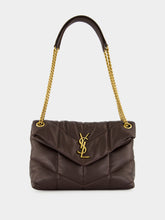
The Loulou

If the Sac de Jour expresses structure, the Loulou explores softness.

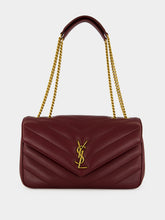
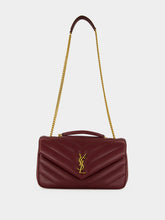
Introduced by Anthony Vaccarello in 2017, the bag was named in homage to Loulou de la Falaise, Yves Saint Laurent's close friend, collaborator and muse. Her unconventional, expressive style became closely connected to the visual world of the house.

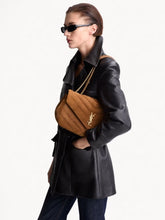
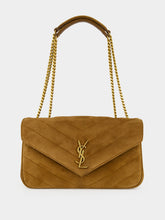
The Loulou translates that history through padded leather, chevron quilting and the Cassandre YSL monogram. Its relaxed construction softens the graphic quality of the logo, creating a contrast between ease and polish.

It is precisely this tension that makes the Loulou so recognisably Saint Laurent: sophisticated without becoming overly formal.

The Sac de Jour

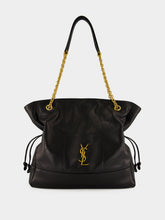
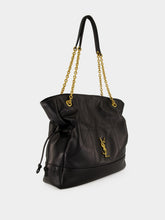
Introduced in 2013 during Hedi Slimane's tenure at Saint Laurent, the Sac de Jour quickly established itself as a modern classic. Its name translates simply as “Bag of the Day”, an appropriate description for a design whose appeal lies in its apparent simplicity.

Look more closely and the construction explains its longevity.

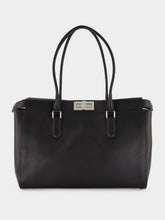
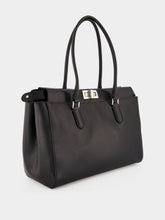
A structured body creates an architectural silhouette, while expandable accordion sides introduce movement and practicality. Twin top handles, discreet hardware and a small padlock complete a bag that deliberately avoids excessive decoration.

The Sac de Jour demonstrates one of Saint Laurent's strongest design principles: when the silhouette is precise enough, very little else is required.

Le 5 à 7

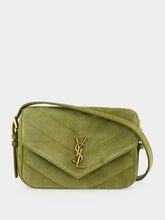
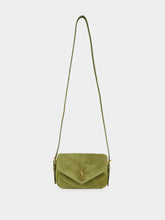
The Le 5 à 7 arrived in Saint Laurent's Spring 2021 collection under Anthony Vaccarello. Compact, clean and designed to sit close beneath the arm, it distilled the shoulder bag into an exceptionally simple silhouette.

Its name references the French expression associated with the hours between late afternoon and evening and has also been connected to Agnès Varda's 1962 film Cléo from 5 to 7. The result is a bag whose identity is intrinsically linked to Paris and to that transition from day into night.

The most recognisable versions place the Cassandre monogram directly at the centre of the closure. Rather than functioning purely as decoration, the logo becomes part of the architecture of the bag itself.

From the Sac de Jour to the Loulou and Le 5 à 7, the evolution of Saint Laurent handbags reveals a consistent vocabulary: sharp lines, carefully controlled proportions and pieces designed to become part of a wardrobe rather than overwhelm it.


Valentino: From Roman Couture to the Rockstud

Where Saint Laurent's story begins in Paris, Valentino is inseparable from Rome.

Valentino Garavani opened his first atelier on Via Condotti in 1959, before formally establishing Maison Valentino with Giancarlo Giammetti in 1960. By 1962, the house had gained international recognition with a presentation at Florence's Palazzo Pitti, while the celebrated White Collection of 1968 became another defining moment in its history.

The language of Valentino developed around couture technique, romance, colour and a particular understanding of decoration. Its handbags extend that vocabulary, often using one recognisable detail to completely transform an otherwise classical shape.

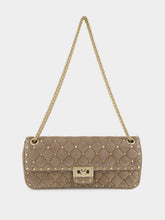
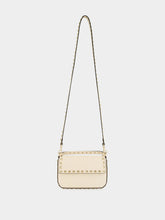
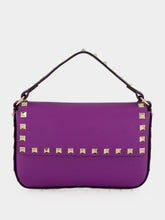
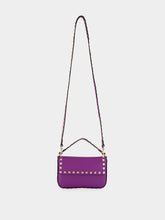
Few details illustrate this better than the Rockstud.

The Rockstud

Introduced as part of Valentino's Fall 2010 collection under Maria Grazia Chiuri and Pierpaolo Piccioli, the Rockstud became one of the defining fashion motifs of the following decade. Piccioli later identified that Fall 2010 collection as a breakthrough moment for the designers.

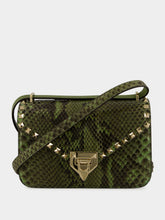
The idea is deceptively simple: pyramid-shaped studs placed against precise leather construction.

Yet the contrast changes everything.

The stud brings an unexpected edge to silhouettes that might otherwise appear traditionally feminine. Applied to handbags, shoes and accessories, it created a new visual language for Valentino — somewhere between Roman classicism, contemporary attitude and couture-level attention to detail.

More than fifteen years later, Rockstud remains part of the Valentino Garavani handbag vocabulary, proving how a single design element can evolve into a recognisable house signature. Valentino itself continues to describe the Rockstud as one of its defining Maison codes.

The VLogo and Locò

Another important chapter in Valentino bags centres around the VLogo Signature.

Rather than hiding the house identity, Valentino often makes the V part of the construction of the bag. The Valentino Garavani Locò, for example, places the metallic VLogo prominently against a compact rectangular silhouette.

The result is graphic and immediate: smooth leather provides the canvas, while the VLogo becomes the focal point. Detachable handles and chain straps allow the design to move between shoulder bag, crossbody and handbag, combining a strong visual identity with everyday adaptability.

It demonstrates how a historic fashion house can use its own symbols not simply as branding, but as design.

Nellcôte

Under Alessandro Michele, appointed Creative Director in 2024, Valentino has also begun revisiting a more eclectic side of its identity.

The Valentino Garavani Nellcôte offers a particularly clear example. The house describes the collection as recalling the eclectic spirit of the 1960s, combining suede with studs, fringes and richly decorative surfaces.

Seen alongside the Rockstud, the contrast is revealing. One transforms a classical form through disciplined hardware; the other embraces texture and movement.

Together, they show that Valentino's handbag history has never been about one definition of femininity. It moves between restraint and ornament, precision and fantasy.


Fendi: A Century of Leather, Craft and Experimentation

For Fendi, the handbag is not a later addition to the story of the house. It is there from the beginning.

Adele Casagrande and Edoardo Fendi opened the first Fendi boutique in Rome in 1925, combining a handbag shop with a fur workshop. The house's early leather tradition included Selleria, a hand-stitching technique learnt from Roman master saddlers and still used by Fendi artisans today.

That relationship between tradition and experimentation would eventually produce two of the most important designer bags of the modern era: the Fendi Baguette and the Peekaboo.

The Fendi Baguette

Few handbag stories are as influential as that of the Fendi Baguette.

Designed by Silvia Venturini Fendi in 1997, the Baguette takes its name from the way the compact bag can be carried beneath the arm — reminiscent of carrying a French baguette. Fendi describes it as the first “It bag”, a design that transformed the handbag from a practical accessory into an object of fashion desire in its own right.

Its importance does not lie in a single definitive version.

Quite the opposite.

Over the years, the Baguette has appeared in an extraordinary variety of fabrics, embroideries, colours, beads, sequins and leathers. Its simple rectangular form acts almost like a frame, allowing Fendi's craftsmanship and creativity to change what sits within it.

That adaptability is one reason the Baguette has remained relevant. The silhouette is constant; its personality is not.

Its place in popular culture also helped redefine the relationship between fashion and television, most famously through Sex and the City, where the Baguette became closely associated with Sarah Jessica Parker's Carrie Bradshaw. Vogue credits that cultural visibility with helping establish the design as one of the defining It bags of its generation.

The Baguette did more than become iconic. It helped establish the very idea of the modern “It bag”.

The Peekaboo

More than a decade after the Baguette, Fendi created an icon with an entirely different personality.

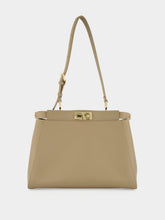
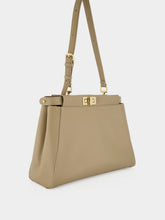
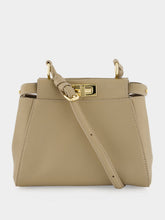
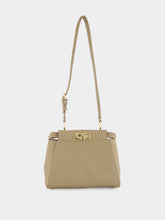
Introduced in 2009, the Fendi Peekaboo is structured, architectural and intentionally designed to reveal part of its interior. Its name refers to the children's game: depending on how the bag is fastened, contrasting leather, colour or craftsmanship inside becomes visible from the exterior.

This apparently small gesture reverses one of the conventions of handbag design.

Normally, the exterior receives all the attention and the interior remains private. The Peekaboo treats both surfaces as equally important. Opening the bag becomes part of its design.

Silvia Venturini Fendi has described the Peekaboo as a response to the era of the Baguette. Where the earlier bag celebrated decoration and constant variation, the Peekaboo returned to a more timeless form while allowing craftsmanship to reveal itself from within.

That duality — serious from a distance, playful when examined closely — is quintessentially Fendi.

By The Way

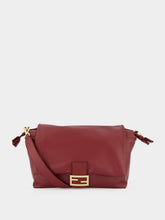
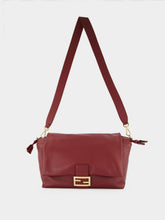
Introduced for Fall/Winter 2014, the Fendi By The Way brought a more relaxed expression to the House’s handbag vocabulary. Its softly structured Boston silhouette combines clean lines with a design conceived to adapt to different ways of carrying it — by hand, on the shoulder or crossbody.

Details such as the short handles, detachable strap and elongated zip pull give the bag its distinctive character, balancing practicality with Fendi’s precise approach to leather craftsmanship.

Over time, the By The Way has continued to evolve through different materials, proportions and finishes. More recently, the design has been revisited through Selleria, connecting its contemporary silhouette with the hand-stitching tradition that has been part of Fendi’s leather craftsmanship since 1925.

Where the Baguette celebrates transformation and the Peekaboo reveals craftsmanship from within, the By The Way finds its identity in versatility — an everyday design that adapts without losing its recognisable form.


Three Houses, Three Ways of Creating an Icon

Saint Laurent, Valentino and Fendi have each created handbag icons through a distinct design language. Saint Laurent is defined by precise silhouettes and understated Parisian attitude, seen in styles such as the Sac de Jour, Loulou and Le 5 à 7. Valentino transforms recognisable house codes into accessories, with the Rockstud becoming one of its most enduring signatures since its introduction in 2010. Fendi, meanwhile, has shaped modern bag culture through designs such as the Baguette and Peekaboo: the first helping define the era of the “It bag”, the second placing craftsmanship and construction at the centre of its identity.

What connects these iconic designer bags is their ability to evolve while remaining instantly recognisable. Materials, proportions and details may change from season to season, but the codes that define each design endure — allowing an icon to remain part of fashion history while continuing to belong to the present.

The Bags Library at Fashion Clinic Comporta

A handbag can tell us about a designer, a decade, a city or the way people chose to dress at a particular moment in history.

That is what makes collecting bags surprisingly close to collecting books.

At The Bags Library, Fashion Clinic brings those two worlds together. Saint Laurent, Valentino Garavani and Fendi handbags are presented alongside books that explore the houses, designers and cultural moments around them — inviting each piece to be read as closely as it is worn.

Discover The Bags Library at Fashion Clinic Comporta, open until the end of December, and explore the selection of Saint Laurent, Valentino Garavani and Fendi bags online and in store.

LATEST STORIES

Fendi Baguette The History of the Bag That Became a Fashion Icon
Fashion

Fendi Baguette: The History of the Bag That Became a Fashion Icon

Few handbags manage to stay relevant for almost thirty years. The Fendi Baguette is one of them. Launched in 1997, it's just as coveted today as it was the year it was born — and the return of the ...

Read more
The Horoscope Series Virgo Through Twiggy’s Style
Fashion

The Horoscope Series: Virgo Through Twiggy’s Style

Fashion and astrology have more in common than one might expect. Both offer a language through which we explore identity, personality and the ways we choose to express ourselves. In the FASHION CLI...

Read more